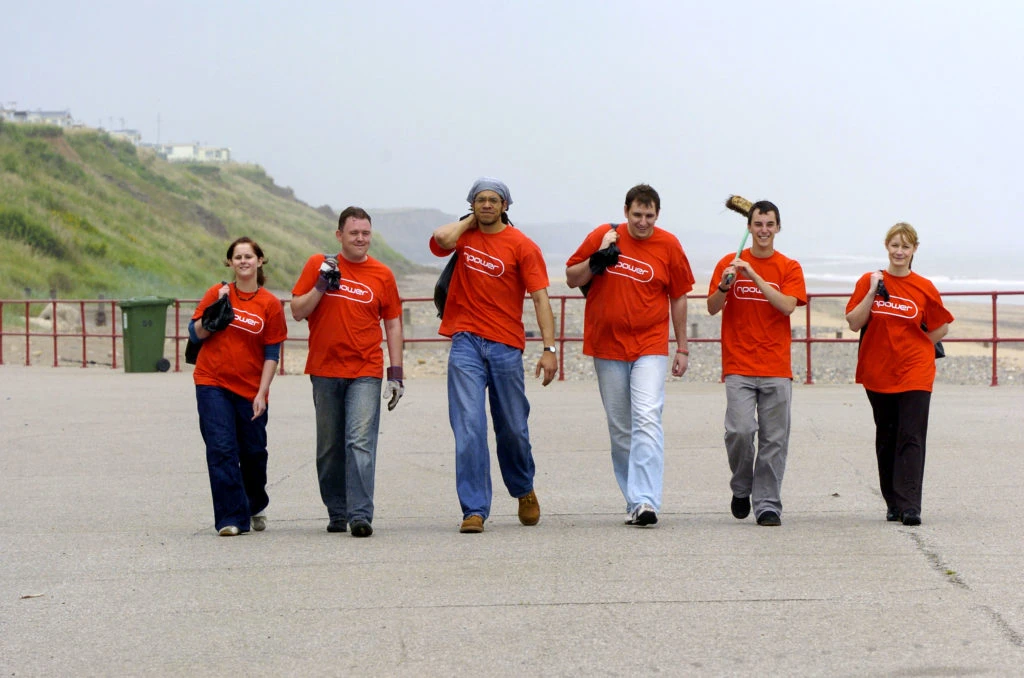
Volunteering in the UK
According to the National Council For Voluntary Organisations’ (NCVO) UK Civil Society Almanac 2016 42% of the UK population over the age of 16 undertook a formal volunteering engagement at least once a year. Formal volunteering is considered giving help to giving unpaid help through a group, club or organisation. Since 2001, this number is more or less stable with the rates of adults formally volunteering at least once in the last year continue to be within five percentage points of each other.
Likewise, the rates of adults volunteering at least once a month has also remained steady since 2001.
In 2014/15, 27% of adults volunteered at least once a month, the same as the 2013/14 figure.
Consequently, it is estimated that 21.8 million people were formally volunteering at least once in the last year, and 14.2 million people formally volunteering at least once a month.
Similar to overall rates of volunteering, the amount of time spend on it has remained stable since 2001. In 2014/15 the estimated mean hours per month among regular volunteers was 11.6.
A majority of the adult inhabitants of the United Kingdom are active in informal volunteering, providing unpaid help to individual people who are not relatives. In 2014/15, 59% of adults reported volunteering informally at least once in the last year and 34% have done so at least once a month. If we would extrapolate the results of this survey, this would mean about 31.2 million people who volunteered informally at least once in the last year and 18.7 million people who volunteered regularly.[1]
Legal framework.
There is no legal framework determining who can be a volunteer or outlining which organisations can offer volunteering opportunities. However, the 2010 Compact Agreement sets out a way of working that aims to ensure that the government works effectively in partnership with the voluntary and community sector to achieve common goals and outcomes for the benefit of communities and citizens. It considers areas such as involvement in policy design and consultation, funding arrangements (including grants and contracts), promoting equality, ensuring better involvement in delivering services, and strengthening independence. The Compact Agreement plays a key role in cross sector working and ensuring that organisations are better able to influence and deliver services and policies which will have the most positive impact within their community.[2]
Volunteers do not enjoy the same rights as paid staff. Therefore, it is not compulsory to enter in a formal agreement with them. However, entering in a voluntary agreement is highly recommended and allows both the volunteer and the volunteering organisation to have an overview of:
- the level of supervision and support you’ll get
- what training you’ll get
- whether you’re covered under the organisation’s employer or public liability insurance
- health and safety issues
- any expenses the organisation will cover[3]
There is no upper age limit to volunteering; however volunteering organisations can bar you from volunteering when their insurance policies do not cover people under the age of 16 and over 80. Local councils might issue extra rules about the volunteering work young people are allowed to undertake. E.g. a council might consider working for a charity shop not as a volunteering position if they consider the shop to be a profit-making organisation.[4]
Defining volunteering
Similar to the absence of a legal framework, there is no standard definition on volunteering in the UK. However, the definition provided by NCVO, is most useful. It defines volunteering as “Any activity that involves spending time, unpaid, doing something that aims to benefit the environment or someone (individuals or groups) other than, or in addition to, close relatives. Central to this definition is the fact that volunteering must be a choice freely made by each individual.
This can include formal activity undertaken through public, private and voluntary organisations as well as informal community participation and social action. Everyone has the right to volunteer and volunteering can have significant benefits for individuals.”[5]
With the absence of a legal framework and a legal definition on volunteering many organisations and private persons can engage volunteers for the benefit of their community. Several organisations, are set up to help people finding the volunteering scheme most suitable for them.
The Do-it database contains more than a million volunteering opportunities and is searchable by interest, activity or location. Alternatively, one can contact Volunteering England, Volunteer Scotland, Volunteering Wales, Jersey Charities, Guernsey Charities or Volunteering Matters to find volunteering opportunities.[6]
Many schemes also provide the opportunity to volunteer abroad. The International Citizen Service provides the opportunity to volunteer overseas, and bringing volunteers from other countries to the UK. According to its latest data available 6,381 UK volunteers went overseas in its 2012-2015 work programme.
The European Voluntary Service (EVS) provided the opportunity to up to 100,000 European youngsters with the support of the Erasmus+ programme to volunteer in another European country. Via the European youth portal interested volunteers between the age of 17-30 can look for voluntary placements with more than 500 accredited organisations for a volunteering placement ranging between 2 weeks to 1 year.[7]
The newly established European Solidarity Corps will be supporting volunteering engagements in the UK and overseas for the same age group by linking potential volunteers with volunteering projects.[8]
[1] UK Civil Society Almanac 2016 / Volunteering rates and overview.(https://data.ncvo.org.uk/a/almanac16/volunteer-overview/#formal-volunteering° Last accessed on 2/03/2017.
[2] Compact: the agreement between government and the voluntary/community sector, Department for Work and Pensions, 2010. (https://www.gov.uk/government/publications/compact-the-agreement-between-government-and-the-voluntary-community-sector). Last accessed on 2/03/2017
[3] Volunteer placements, rights and expenses: 2. Volunteers’ rights, (https://www.gov.uk/volunteering/volunteers-rights). Last accessed on 02/03/2017.
[4] Volunteer placements, rights and expenses: 3. When you can volunteer, (https://www.gov.uk/volunteering/when-you-can-volunteer). Last accessed on 02/03/2017.
[5] VOLUNTEERING, (https://www.ncvo.org.uk/policy-and-research/volunteering-policy). Last accessed on 02/03/2017.
[6] Take part: Volunteer, (https://www.gov.uk/government/get-involved/take-part/volunteer). Last accessed on 02/03/2017.
[7] European Youth Portal: Information and opportunities for young people across Europe. (https://europa.eu/youth/eu/article/46/39034_en). Last accessed on 02/03/2017.
[8] European Youth Portal: Information and opportunities for young people across Europe. European Solidarity Corps. (https://europa.eu/youth/solidarity_en). Last accessed on 02/03/2017.