All about volunteering in Europe!

Partners from the five different European organisations composing the EUROVIP consortium have drafted articles in the rubric “resources” of this website, which you are invited to visit to know more on the specificities of volunteering in France, Belgium, Germany, Romania and the United Kingdom!

Here is a little bit of teasing!

Volunteering activities are wildly spread in the UK. According to the National Council for Voluntary Organisations, 42% of the UK population over the age of 16 undertook a formal volunteering engagement at least once a year, in formal or less formal contexts. This type of commitment is not always formalised, but “volunteering agreement” between the organisation and the volunteer are recommended and spread.

In Germany, in which in 2016 more than 23 Million people have been volunteering, there is no official definition or agreement for volunteering activities. It needs to take place in a nonprofit area and without payment of the volunteer. At the regional level, volunteering agencies provide information about regulations and support the contact between those interested in volunteering and vacancies.

In Belgium, volunteering is only possible in nonprofit organisations. More and more young from 18 to 25 years old choose to engage through the citizen service, during 6 to 9 months, and commit themselves in solidarity based projects, in which the time is divided between 80% of field activities and 20% of trainings.

A very similar program exists in France. Called “service civique’”, it targets the same group and type of missions. It belongs to the formalised type of volunteering, for which an agreement is made between the young and the host organisation, defining missions and the level of remuneration. Informal volunteering is nevertheless spread in France. In this case, the responsibility and engagement of the volunteer is only moral.

The concept of volunteering is evolving rapidly in Romania, which enjoys a very comprehensive legal framework. Romania has indeed a legal framework that regulates volunteering activities, to avoid the exploitation of human resources and to ensure the security of the volunteer. An interesting aspect is also the recognition of volunteering as professional experience if the volunteering experience is done in the same field as one’s studies.

Now go on the resources page for a more in depth look into the European volunteering landscape!

Training to the ProfilPass method, Getting to know our own Competencies

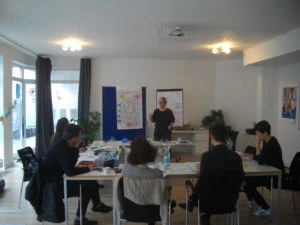
Last month the EuroVIP consortium met in the beautiful city of Leipzig in Germany, where we could enjoy the hospitality of our Wisamar colleagues during a two days’ induction in the use of the ProfilPASS. Currently, we are working to adapt this document into the “Portfolio for Volunteering experiences – Based on the ProfilPASS,” which we expect to introduce in the first months of the New Year. This training enables us to use this document for the benefit of volunteers most effectively.


imgp8451


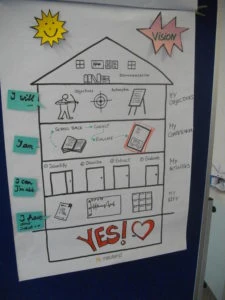
We had the opportunity to get familiar with the different pahases and tools of the ProfilPASS you can use to identify and to assess your skills and competencies. Our training started with an overview of the reasoning behind the ProfilPASS, which is a tool developed for assessing skills gained whilst undertaking informal and non-formal activities. In Germany, it has been used in a wide variety of settings for a diverse public including prisons, companies, schools, or for vocational orientation. Recently it has also been used to help the integration of refugees in the labour market.

The tool is remarkably flexible, and thus , rather than using it once it serves more as an archive of skills gathered throughout its lifetime, where important experiences can be stored for later consultation. It can therefore be adapted to a wide variety of age groups and target audiences. Over the course of the training session we learned how to identify and describe our experiences and to assess the competences we gained during them. As a final exercise the facilitator challenged us to think of ways in which to improve on these skills.


imgp8455


Upon completion of our training we reflected and shared our ideas how the “Portfolio for Volunteering experiences – Based on the ProfilPASS” could be best used for the benefits of youngsters and employers in tackling youth unemployment. Based on the lessons we learned and each other’s feedback we will be working to develop a tailored Employee Volunteering scheme using the “Portfolio for Volunteering experiences – Based on the ProfilPASS” in the course of 2017.

We expect to be hosting training sessions in the use of the “Portfolio for Volunteering experiences – Based on the ProfilPASS” during the first half of next year.

The original ProfilPASS – EuroVIP Evaluation of volunteering experiences

schriftzug-blauThe ProfilPASS portfolio offers a structured collection of material to reflect one’s experience in all areas of Lifelong Learning. Developed by the German Institute for Adult Education-Leibniz Centre for Lifelong Learning (DIE) and the Institute of Developmental and Structural Research (ies), the ProfilPASS method is based on a combination of work with a portfolio and a qualified ProfilPASS advisor accompanying the process of self-reflection.
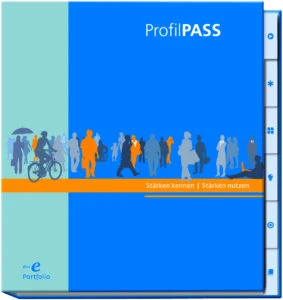
The portfolio supports the systematic self-reflection and self-evaluation of ones competences as much as planning future personal development. All areas of formal, informal and non-formal learning, e.g. family life, volunteering, hobbies, as well as profession, are considered. Personal competences are derived from reflecting upon ones activities within all areas of life. While our professional knowledge is often obvious to us, competences such as, e.g. the willingness to learn, creativity or resilience are often acquire unconsciously and “en passant”. The ProfilPASS method raises awareness for all areas of Lifelong Learning and competencies deriving from there.

pp_gross-1

The ProfilPASS is meant to address a broad range of target groups. The ProfilPASS for young adults aiming especially at those age 13 to 18. In October 2016 the DIE presented a revised version of the ProfilPASS, now also available as download, which improves the customization of material according to the client’s objectives and requirements. Additionally English, French and Spanish translations of the ProfilPASS are available.

The European project European volunteer inclusion program (EuroVIP) is currently adapting material from the ProfilPASS and ProfilPASS for young adults to create a portfolio focusing especially on volunteering experiences of young adults (age 17 to 35) on their path towards employment. The EuroVIP portfolio Evaluation of volunteering experiences takes into consideration the requirements and needs of volunteers in participating European countries. In addition a certificate is created to recognize competences and personal qualities applied and acquired through volunteering.

For more information on the original ProfilPASS: www.profilpass.de (German)

English information under:

www.die-bonn.de/institut/dienstleistungen/servicestellen/profilpass.aspx?lang=en&