Here you can find the English version of the Volunteering Experience as a step toward employment- A practical guide for recruiters. Enjoy!
All posts by Laura
The hardest part of starting up is starting out.
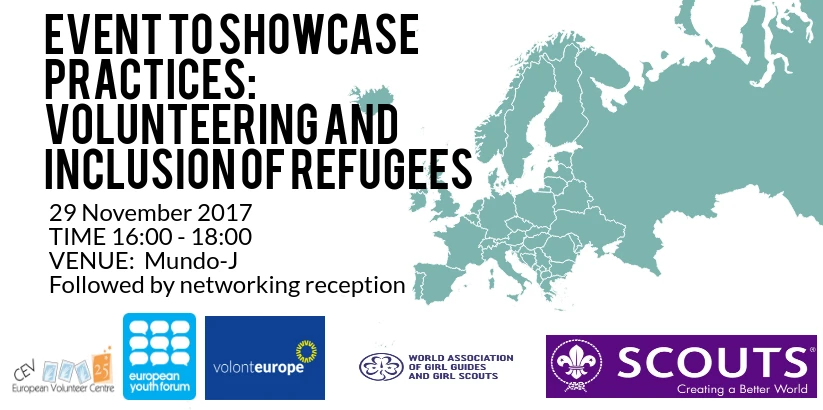
Volunteering and the inclusion of refugees
Volunteers and their organisations have been contributing immensely to support the needs of refugees in Europe. Volonteurope, CEV, European Youth Forum, WAGGGS and WOSM have organised an event that will showcase projects and initiatives that engage volunteers for refugee inclusion. Together, we aim to understand more about these important activities and what needs be done at policy and practice levels in order to further increase impact and contribute to inclusion and mutual understanding in Europe.
The positive gains and the impact of these actions is important also for the volunteers. The event will also be the occasion to reflect on the skills gained by volunteers, exploring how volunteering contributes to improving their lives and skills while building inclusive societies.
When? 29th of November – afternoon/early evening
Where? Mundo J, Rue de l’Industrie 10,
TIME 16:00 – 18:00
18:00 onwards – networking reception
Click here for tickets
ESC Volunteering Strand – Potential Positive Impact on the Labour Market
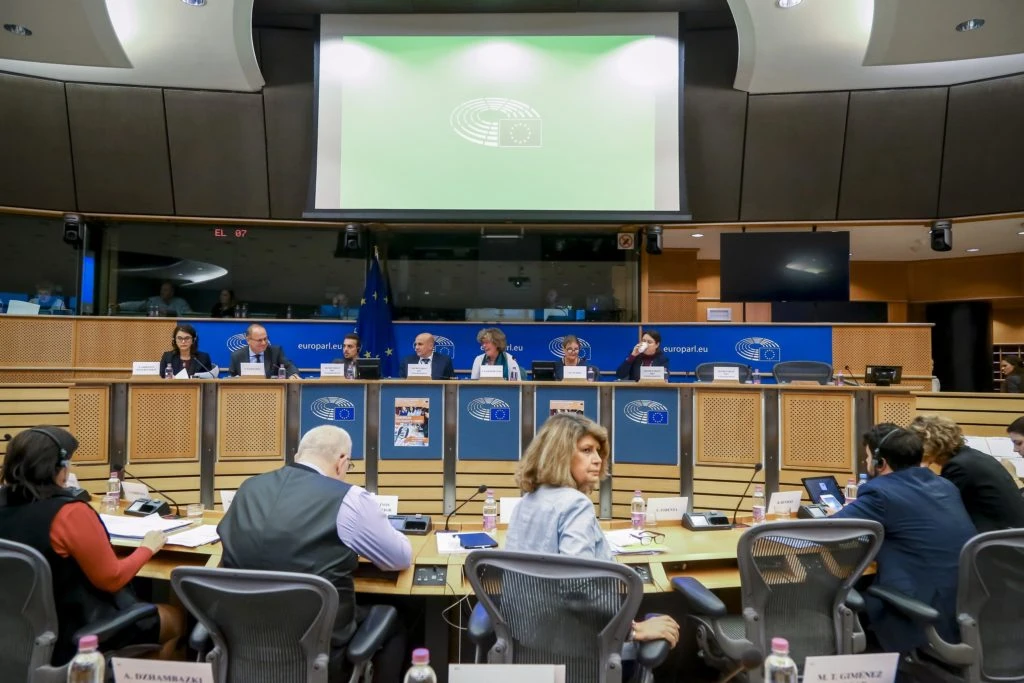
On 10 October 2017 I was invited to speak on behalf of Volonteurope (an international network promoting volunteering, active citizenship and social justice, whose Secretariat is hosted and supported by Volunteering Matters in the UK) at the European Parliament joint CULT and EMPL Committees Public Hearing on the European Solidarity Corps (ESC) proposal.
The purpose of the hearing was to debate the objective and effectiveness of the ESC as it is currently outlined in the proposal from the European Commission. A number of important questions were debated regarding the ESC format and form, objectives and implementation, quality and inclusiveness, as well as its reliance on existing EU programmes and funds.
Volunteering Matters, as you know, has been actively engaged in the EuroVIP project, a Key Action 2 Strategic Partnership initiative of the Erasmus+ Programme; it has also, to date, been successfully involved, either as a partner or lead organisation, in a number of other Key Action 2, 1 and 3 cross-border projects. Therefore, as Secretary General of Volonteurope and based on consultation with members and partners, I presented a thorough response to a list of questions put forward to the Public Hearing contributors by the European Parliament.
Piotr Sadowski speaking during CULT Joint public hearing – ‘ European Solidarity Corps
First and foremost, one of our big concerns is the reallocation of funds from the Erasmus+ budget (particularly from the EVS line), between 2018-2020, to ESC: close to 58% of the ESC allocation in those three years will come from Erasmus+ and while the vast majority coming from the EVS budget (KA1), it still nevertheless concerns us in terms of the possible detrimental impact on other Erasmus+ actions, such as Strategic Partnerships. We are also concerned about the successor to the Erasmus+ programme when it comes to the negotiations on the next Multi-Annual Financial Framework from 2020 onwards, and what allocations would be provided to the different key actions as they currently exist in the Erasmus+ Programme.
Another important issue which I addressed is the criticism that is often voiced that, under the current proposal for ESC (with its two strands, occupational and volunteering), some quality jobs risk to be replaced by unpaid volunteering, with employers potentially choosing full time free volunteers over paid regular workers. We as Volonteurope agree with this criticism and therefore would argue that the placements under the volunteering strand should be funded to voluntary sector, civil society, youth organisations, not-for-profit foundations, social enterprises, rather than the private sector, as this would reduce this risk. These organisations, under a quality label, work in the ethos of not replacing jobs with full-time volunteers.
There should also be a distinction in the quality label for volunteering placements and for the occupational strand, and in the latter, social partners should be included to ensure that the jobs offered under ESC offer quality work, rather than cheap labour. Overall, the ESC design at the moment is lacking a very clear distinction between the two strands and their delivery, which creates the fear and criticism as mentioned in this question. There are also not enough provisions in place for quality objectives in employment placements specified, which thus brings me back to my earlier point about the danger of running precarious, cheap labour, work placements in the employment strand of the ESC.
We do believe that the for-profit sector should participate in the employment strand (not the volunteering strand); however, social partners, job centres or equivalent employment services should be engaged in the design and monitoring of the strand, to ensure that the work offered is quality and rewarding work.
There is also an important role for the private sector to play in the possible success of using ESC volunteering strand as an important pathway to gaining skills through volunteering that the private sector would recognise as valid skills which make a young person more job-ready. Potentially, the ESC could have a positive effect on the labour market thinking specifically if employers are targeted at the same time as the programme is being implemented, with an encouragement to recognise the experience gained by ESC participants in the volunteering strand as genuine skills that make a young person more prepared for the labour market.
Here, again, we should see a concerted effort of all relevant stakeholders; not least employers who are already market leaders in recognising the value of skills gained through volunteering amongst their prospective employees. Civil society organisations who are experienced in working with the corporate sector in employee volunteering schemes should be also actively engaged in this process. The use of excellent tools such as ProfilPASS, re-developed through the EuroVIP project, should be encouraged and promoted in the ESC initiative.
Piotr Sadowski, Secretary General of Volonteurope
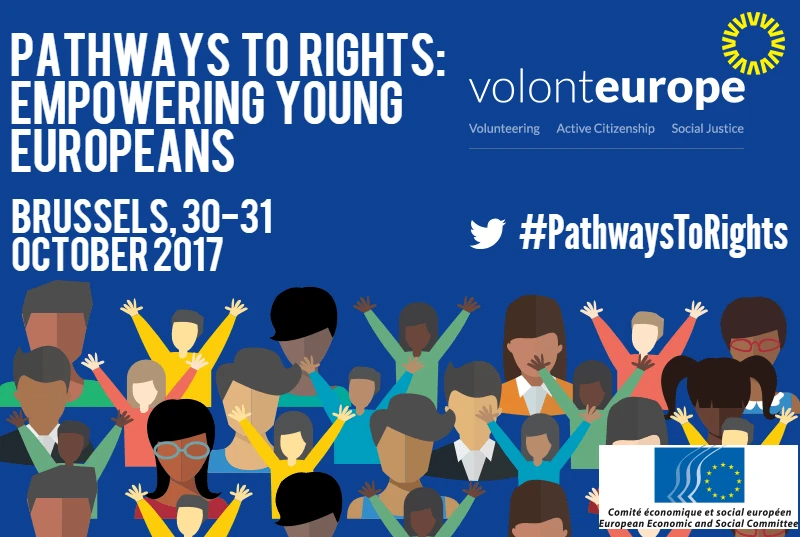
‘Pathways to rights: empowering young Europeans’ – Volonteurope conference in Brussels
With youth unemployment rates soaring in large parts of Europe too often, young people are left out of the processes that shape their futures. Participation, social action and active citizenship are pathways to the social empowerment of young people. The aim of the EuroVIP project is to use volunteering to help young people to successfully participate in the labour market, and thus work towards the professional empowerment of young people. In times of unprecedented societal and labour market challenges, and when the civic space is shrinking, we need to find new ways of participating and work to strengthen successful initiatives.
Volonteurope’s 26th annual conference will be an occasion to share practices and information around participation as a pathway to accessing rights and strengthening social cohesion.
Volonteurope is an international network promoting volunteering, active citizenship and social justice in Europe and beyond. Its UK member Volunteering Matters will use the occasion of the conference to present the EuroVIP portfolio and offer support for using it to volunteers from other member organisations.
The conference: ‘Pathways to rights: empowering young Europeans’ will bring together young people to discuss, share experience and learn from others about ways in which they engage with civil society organisations to create a better and fairer society that will lead to social justice.
The conference will be held on 30-31 October 2017 in Brussels. Besides speeches by Oonagh Aitken, the chairwoman of Volonteurope, Julie Ward MEP of the S&D Group in the European Parliament and Pavel Trantina, Section president in the European Economic and Social Committee the conference will host a variety of presentations by participants from across the European Union about the power of volunteering to guarantee the access to fundamental rights. A comprehensive report about this vital issue authored by Volonteurope will conclude the conference.